

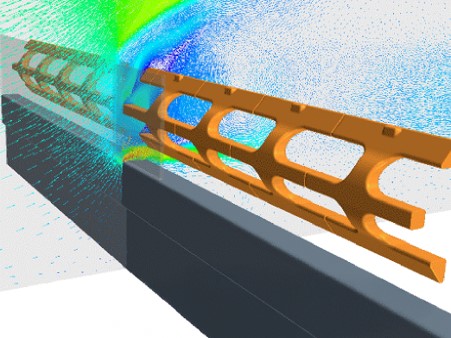
“We built the prototype … but we won’t have access to a wind tunnel for another two years.” This frustration is familiar across industries that depend on aerodynamic or wind performance testing. For many engineering and product development leaders, the biggest bottleneck isn’t design work itself – it’s waiting for test facilities to free up.
A virtual wind tunnel can help teams keep development moving in such scenarios by letting you simulate wind effects digitally, immediately, and continuously, without halting your timeline. It’s a proven engineering method using advanced Computational Fluid Dynamics (CFD) tools to replicate real-world wind conditions on your designs in a computer.
To get started with virtual wind tunnels, teams can either identify their immediate wind engineering needs and select suitable CFD software or partner with a specialized simulation provider to guide the adoption process and ensure results align with project requirements. In simple terms, a virtual wind tunnel makes it possible to test and refine designs long before physical validation is available.
What Is a Virtual Wind Tunnel?
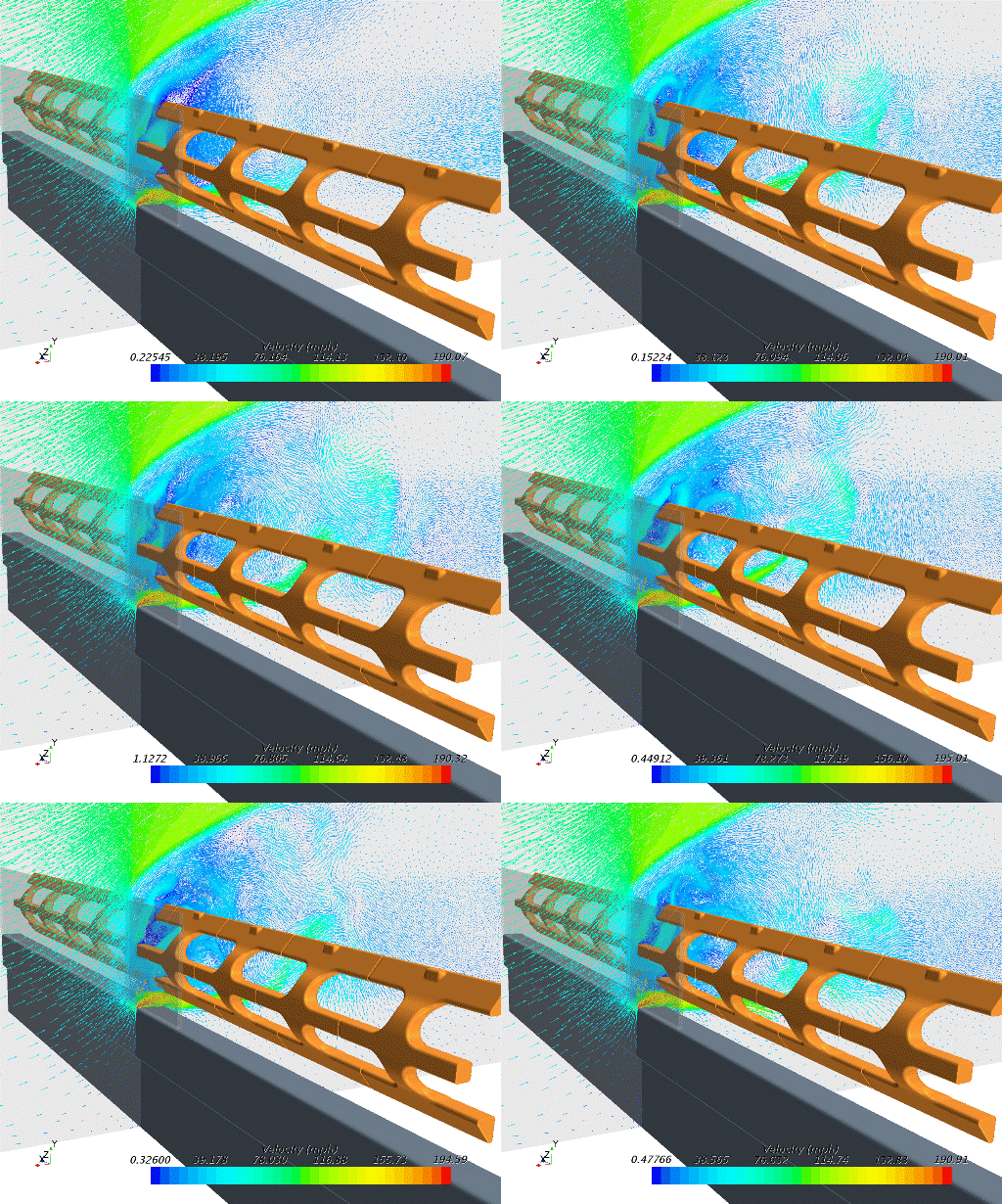
A virtual wind tunnel is essentially CFD-based wind engineering simulation. Instead of building a scale model and putting it in a physical wind tunnel, engineers build a digital model of the wind environment and test their design in silico. This process means numerically solving the fluid dynamics equations around your product geometry under specified conditions. In practical terms, it involves generating a mesh of the airflow domain around your structure and defining realistic boundary conditions – such as an atmospheric boundary layer profile to mimic how wind speed increases with height. With this computational setup, engineers can expose their design to simulated wind flows from various directions, speeds, and turbulence levels, just as they would in a physical facility, but on their own schedule.
Crucially, a virtual wind tunnel isn’t an academic exercise; it’s widely used by top organizations in industry to expedite aerodynamic development. NASA, Boeing, and automotive leaders like Audi all leverage CFD to minimize physical wind tunnel hours and accelerate program schedules. The technology allows detailed flow visualization (streamlines, pressure fields) and analysis that would be labor-intensive or impractical with physical measurement alone.
In short, a virtual wind tunnel provides flexibility to simulate complex wind scenarios and refine a design long before you physically test it.
Virtual vs. Physical: A Practical Comparison
Physical wind tunnel testing offers direct real-world interaction and has been the gold standard for final validation for decades. However, it comes with significant constraints. Physical tests require custom scale models, painstaking setup and instrumentation, and typically long wait times for access to high-demand facilities. They also cover only limited scenarios per test – each wind direction or design change might require a new setup or model, making rapid iteration difficult and costly. Indeed, wind tunnel campaigns can cost hundreds of dollars per hour and must often be booked months ahead.
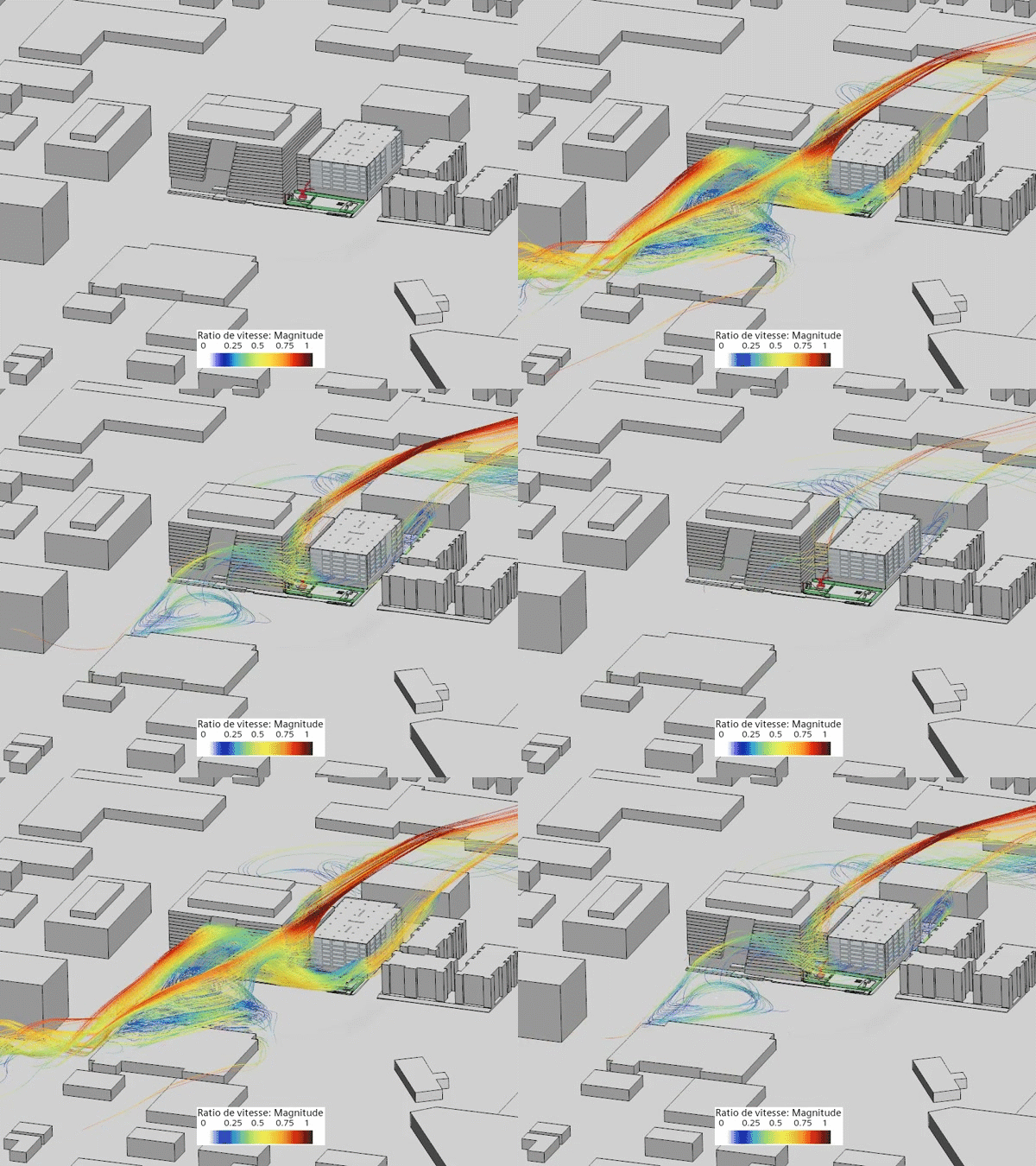
By contrast, virtual wind tunnels offer immediate, repeatable, and flexible testing. Once an initial model is set up, exploring a new wind direction or design tweak is as simple as adjusting software inputs, with no physical reconstruction needed. Simulations can be run in parallel to evaluate dozens of wind scenarios, different angles, speeds, terrains, and even extreme events that would be impractical to test one by one. Computational power allows simulations to be completed in days or hours of machine time, not months of lead time. The results from virtual wind tests also provide richer datasets, including full 3D flow fields, pressure distributions over every surface, and insights into phenomena such as turbulence, vortex shedding, and recirculation zones, aspects that might be difficult to capture with limited sensors in a physical test.
From a cost and ROI perspective, virtual wind tunnel testing typically requires a lower upfront investment, as there is no need for custom scale models, physical setup, or travel to specialized facilities. While CFD software licenses and high-performance computing come with costs, these are often outweighed by the ability to run many more simulations in less time. Physical wind tunnel tests can reach hundreds or thousands of dollars per hour, plus the cost of fabricating models and downtime due to facility waitlists. Over the course of a project, virtual testing can deliver significant cost savings, faster iterations, and a stronger return on investment by accelerating the design process and reducing the risk of late-stage design changes. For managers evaluating testing strategies, this combined financial and productivity advantage often makes virtual wind tunnels a clear complement or an alternative to traditional wind tunnel campaigns.
Benefits of Virtual Wind Tunnels
The advantages of a CFD-based wind testing approach align with established engineering practice and evidence from real projects. Flexibility and speed are key: teams can iterate quickly, refining designs between simulation runs, something much more challenging when relying solely on physical tests. Virtual wind tunnels enable broad scenario coverage, including analysis of multiple wind directions and storm conditions, as well as specialized studies such as exhaust plume re-ingestion risks and snow-drifting patterns around structures, providing confidence that a design will perform under varied real-world conditions.
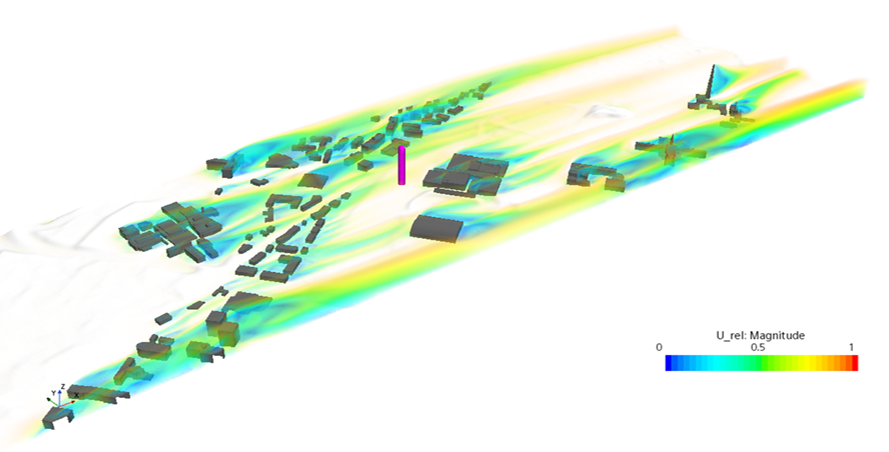
Virtual testing also helps maintain development momentum: instead of waiting to idle for a test slot, engineering teams can gather performance data in parallel with other activities, staying productive while the physical validation is pending. This “test-early, test-often” approach means potential problems are discovered sooner, minimizing costly design changes late in development. For instance, simulations have pinpointed the root causes of vibrational issues within just a few weeks, guiding redesigns that would otherwise have been delayed by waiting for test time. When the time finally comes for a physical wind tunnel test or field trial, you arrive with an optimized, well-understood design, maximizing the value of that final validation step.
Creaform Engineering’s Virtual Wind Tunnel Expertise
At Creaform Engineering, our CFD team provides practical experience and validated methodologies needed to make virtual wind tunnels deliver real results. We bring a comprehensive set of capabilities to address both typical and advanced wind-related challenges, including pedestrian wind comfort studies, urban wind flow interaction analysis, aerodynamic load calculations on structures and equipment, fluid–structure interaction simulations, prevailing wind assessments using climate data, gas plume dispersion modeling, and even snow accumulation analysis under wind. Each simulation project is treated with engineering rigor – selecting appropriate turbulence models, generating high-quality meshes, and carefully reproducing key boundary conditions – to ensure that the CFD results align with wind-tunnel experiments and engineering standards.
By leveraging these capabilities, engineering teams can keep development moving during those waiting periods when physical tests or wind tunnel sessions are unavailable. The virtual wind tunnel serves to de-risk designs early (by checking for issues such as pressure hotspots, structural oscillations, and comfort exceedances) and to sharpen questions for eventual physical testing. The result is a more efficient, evidence-driven design process where physical and virtual testing reinforce each other, trimming unnecessary delays and focusing resources where they add the most value.