


Has there been a more exciting time for engineering and product development than today? Between AI, virtual prototyping, advanced materials, and data-driven design, there are extensive possibilities for continued innovation across sectors, fueling an era of dynamic progress.
Yet, despite the evolution these technologies bring to engineering, rapid advancements can be stressful for engineers and designers. Today, failure to keep up with constant innovation and integrate new capabilities into product lifecycles can leave a company falling behind in this highly competitive market.
However, there is no need to panic. In this comprehensive resource, you will gain expert perspectives on key product development and engineering advancements for 2025, along with actionable recommendations to implement these innovations ahead of your competitor.
1. Virtual Prototypes
Virtual prototypes are digitized simulations that enable product teams to build, test, and refine products in an online environment and without the need for physical models. With advanced tools and processes such as Finite Element Analysis (FEA) and Computational Fluid Dynamics (CFD), new technologies allow product developers to assess everything from form, fit, and function to user interaction and performance.
The benefits of virtual prototyping are clear: it enables for experimentation, repetition, and failure within a digital capacity that allows designers and engineers to perform extensive testing prior to creating physical prototypes, leading to reduced costs and rapid innovation. In 2025 and beyond, these simulations will become more precise, ensuring faster and more effective product design before moving into physical product development.
2. AI to Accelerate Design and Simulation
As explored in recent industry insights, generative AI is transforming how design and testing are approached in product development, leading to reduce development timelines and enable rapid exploration of design possibilities. Paired with the technical expertise of humans guiding the technology, artificial intelligence can provide inputs such as structural strength, weight, and material properties and instantly provide hundreds of different product design alternatives, which can often surpass traditional approaches in innovation.
When it comes to testing, AI-powered simulations can streamline the identification of weak points in complex structures, such as bridges and industrial equipment, offering a faster and more efficient alternative to conventional methods.
3. Advanced Materials for High-Performance Products
Carbon composites, bio-based polymers, and shape-memory alloys are just a few of the advanced materials promoting lighter, stronger, and more sustainable designs. For example, lightweight composites in the automotive industry can improve fuel efficiency, while shape-memory alloys have allowed aerospace engineers to deploy self-adjusted components to streamline maintenance and design.
These materials will continue to evolve in 2025, granting engineers access to materials that:
- Self-heal
- Adapt to different environments
- Provide increased levels of durability
- Improve overall efficiency
- Reduce the cost of production
- Support sustainability
Engineers need to pay constant attention to innovations in advanced materials to stay ahead in a competitive landscape, while also maximize the creation of products that perform better and promote sustainability.
4. Digital Twins for Real Time Product Optimization
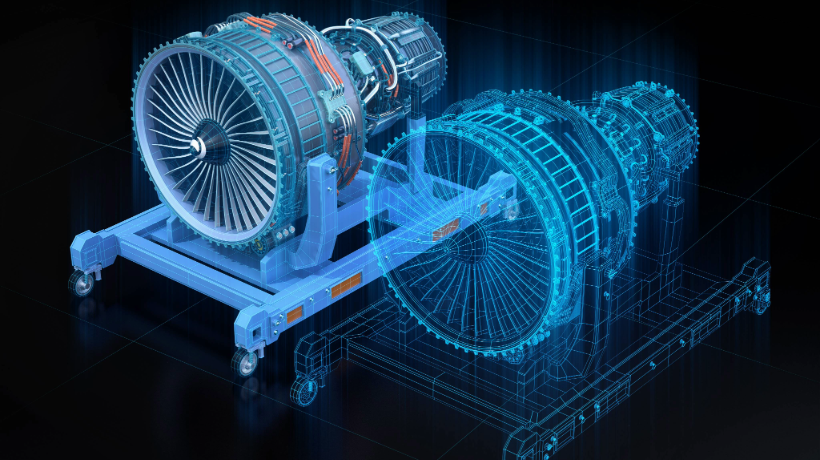
A digital twin is a virtual representation of a physical object, process, system, or even a person, housed in a simulated environment that reflects its actual surroundings. By leveraging digital twins, organizations can model and test real-life scenarios, gaining insights to improve decision-making and outcomes.
In product development, engineers can utilize digital twins to refine designs, test varying performance scenarios, and advance innovation cycles. As explained by Dr. Michael Grieves, the creator of the digital twin concept, “a digital twin unifies all product data into a single ‘source of truth,’ bridging the physical and digital realms and allowing us to identify and resolve issues before they occur in the real world.”
5. IoT-Enabled Products for Smarter Solutions
The Internet of Things (IoT) uses systems, analytics, and software to optimize everyday products across sectors, from household appliances to industrial machinery to cars, by incorporating the Internet into these systems, and creates a network that allows the separate products to share data with one another. Integrating IoT into designs isn’t just an upgrade—it’s a strategic edge for smarter, more competitive solutions.
In the product design process, engineers can build products that offer an improved user experience by incorporating Iot-enabled intelligence that:
- Offers enhanced functionality with features like remote monitoring and adaptive behavior
- Collects real time user data to enhance user-experience
- Supports predictive maintenance to identify and address machinery issues quickly and prevent downtime.
As an example, smart thermostats use IoT sensors to learn about user’s preferences and maximize energy efficiency. In manufacturing, IoT-enabled machinery is used to monitor production lines in real time to identify maintenance necessities and inefficiencies in workflows.
6. Eco-Design as a Competitive Edge
Sustainability has become a fundamental aspect of modern engineering. Eco-design focuses on minimizing environmental impact throughout the product lifecycle by:
- Using recyclable materials
- Reducing waste
- Designing for easy disassembly and disposal
For example, many automakers use lighter, recyclable materials like aluminium alloys to improve energy efficiency and reduce emissions.
In 2025, engineers prioritizing eco-focused product development will meet regulatory standards and create a competitive edge by appealing to eco-conscious consumers.
How to Implement Innovative New Technologies into the Product Lifecycle
As technology evolves, organization need a clear plan for integrating new capabilities like virtual prototype, AI, machine learning, advanced materials, and more into the product life cycle. Creating a culture that prioritizes continuous learning and cross-functional collaboration to make certain that the latest innovations are observed and implemented effectively across departments is key to this process.
Leveraging controlled testing of new technologies, measuring results, and refining your approach before scaling up full implementation are also critical. At the same time, keeping communications with stakeholders open and providing extensive training for all impacted team members will ensure a smooth integration into your product lifecycle and allow for better leveraging of cutting-edge solutions for sustained success.

Innovate With Engineering Leaders
Clearly, big and positive changes will continue to fuel innovation and growth by pushing the boundaries of what's possible in the product engineering sector. To make the best use of these innovations that are transforming engineering and product development for the better, engineering teams need to continue to stay ahead of the curve and implement expanding technologies to fuel growth and maximize efficiency.
Working with experts who have advanced knowledge in these solutions can help your product teams go to market faster and optimize costs.
For engineering teams seeking innovative solutions, connect with our experts to accelerate product development and optimize performance. Let’s achieve your goals together.