


Mar 17, 2025
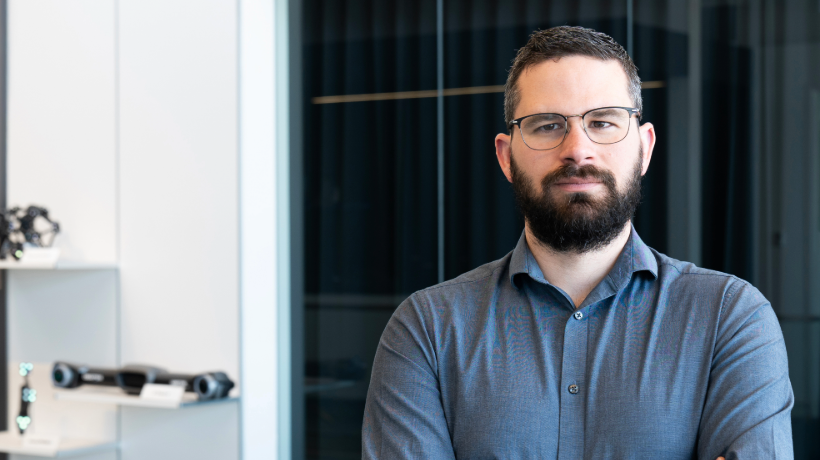
With his diverse background and innovation-focused vision, Tristan plays a key role in the evolution of these services by developing custom strategies that maximize efficiency, safety, and profitability. We sat down with him to discuss his background, ambitions, and the challenges ahead. Here’s the interview.
Can you tell us about your background and your expertise in automation?
I’ve held various roles, from automation specialist to leading an engineering office, which gave me a comprehensive understanding of the challenges in automation. I’ve worked on projects in various sectors such as food processing, automotive, and aerospace, developing modular solutions that combine flexibility, efficiency, and customization. My expertise in high-value-added processes enables me to integrate advanced technologies like machine vision or robotics, which optimize productivity while ensuring operator safety.Why did you join Creaform Engineering, and what attracted you to this role?
What really attracted me to Creaform Engineering was its integrated approach that combines diverse areas of expertise, such as mechanical engineering, numerical simulation, and automation, all within the same team. This synergy between skill sets makes it easier to create custom solutions tailored to our clients’ unique needs. The opportunity to work with experts in these fields was a major draw for me, as it allows us to offer complete, effective solutions while remaining flexible to address the complex challenges of the industry.What challenges and opportunities do you see in the industry today?
The industry is evolving rapidly, with growing demands for automation, safety, and efficiency. For me, the challenges are clear: addressing labor shortages, ensuring a safe work environment, and maintaining high productivity. To tackle these challenges, technologies such as cobotics and artificial intelligence present significant opportunities. The precision and control of motion systems are also key factors to meet the growing demand for accuracy in industrial processes. But of course, this also means staying at the cutting edge of innovation while ensuring our solutions remain reliable and safe. This is where we can truly add value by developing tailored solutions to meet these precise challenges.How do you see the future of the automation service evolving?
The future of the automation service, in my opinion, relies on three key pillars.First, the customization of equipment: clients are seeking solutions tailored to their specific processes, capable of addressing challenges such as flexibility, small-batch production, and the integration of new technologies like IoT or AI.
Second, service quality, which should become a key differentiator. This includes proactive support, rapid response times, and effective monitoring tools to ensure long-term client satisfaction.
Finally, in this highly competitive sector, staying at the forefront of technology is essential. By integrating innovations such as collaborative robots, predictive maintenance, and augmented reality, while closely aligned with market needs, we can position ourselves as a key player and a growth driver for our customers.