


In our latest 'Scan-to-CFD' series, we delve into the fascinating world of aerodynamics with Petorius' groundbreaking eVTOL aircraft—the P25e. Discover the impact of propeller alignment on aerodynamic drag during horizontal flight and the remarkable 18% reduction achieved!
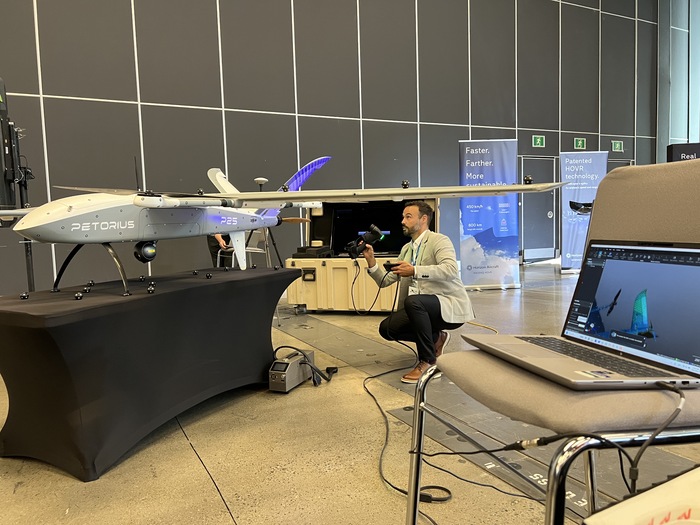
Exciting news from Creaform Engineering and the world of aerospace! In our latest ‘Scan-to-CFD’ series, we ask ourselves about the impact of propeller alignment on aerodynamic drag during horizontal flight of the P25e eVTOL by Petorius.
The Forum Encounter: Creaform’s crew met with Petorius at Aéro Montréal’s 9th edition of it’s International Aerospace Innovation Forum. It quickly became an enthusiastic discussion about the many aerodynamic aspects of Petorius’ eVTOL aircraft, which was exposed right there at the forum. When discussing the impressive autonomy of the aircraft, a question was raised about the position of the vertical propellers during horizontal flight, and their impact on aerodynamic drag. Should efforts be deployed to align the blades of the propellers with the flow during horizontal flight? What gain could be expected in terms of autonomy? Everyone from Creaform Engineering and Petorius had their idea, but it was quickly agreed that a CFD analysis would provide excellent insights!
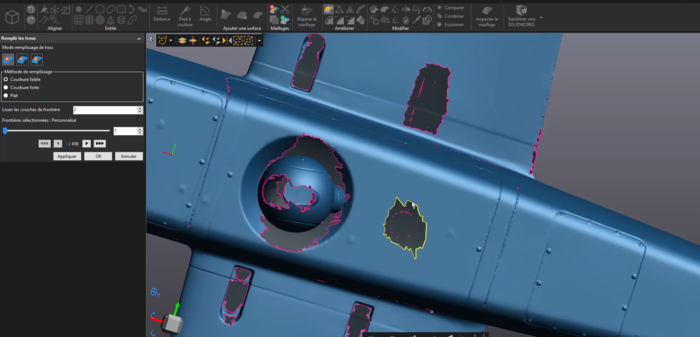
The CFD Investigation: A scanning session was organised on the spot and performed in less than 30 minutes. Then, back home, the scan was prepared for CFD meshing using VxModel and CFD simulations were performed using Star-CCM+. The analysis was limited to a 0° angle-of-attack and a single comparison between the worst-case scenario (clocking of the propellers 90° from streamwise direction) and the best-case scenario (0° clocking - or blades aligned with flow).
The Impact: Aerodynamic drag decreased by 18% for the case with aligned blades! Imagine the implications: 18% less drag means more efficient flight. It translates directly into thrust savings and improved autonomy for the ultra long-range eVTOL.
Stay tuned for other Scan-to-CFD test cases!
Share This Story, Choose Your Platform!